🧧 Minimum Viable Mandarin
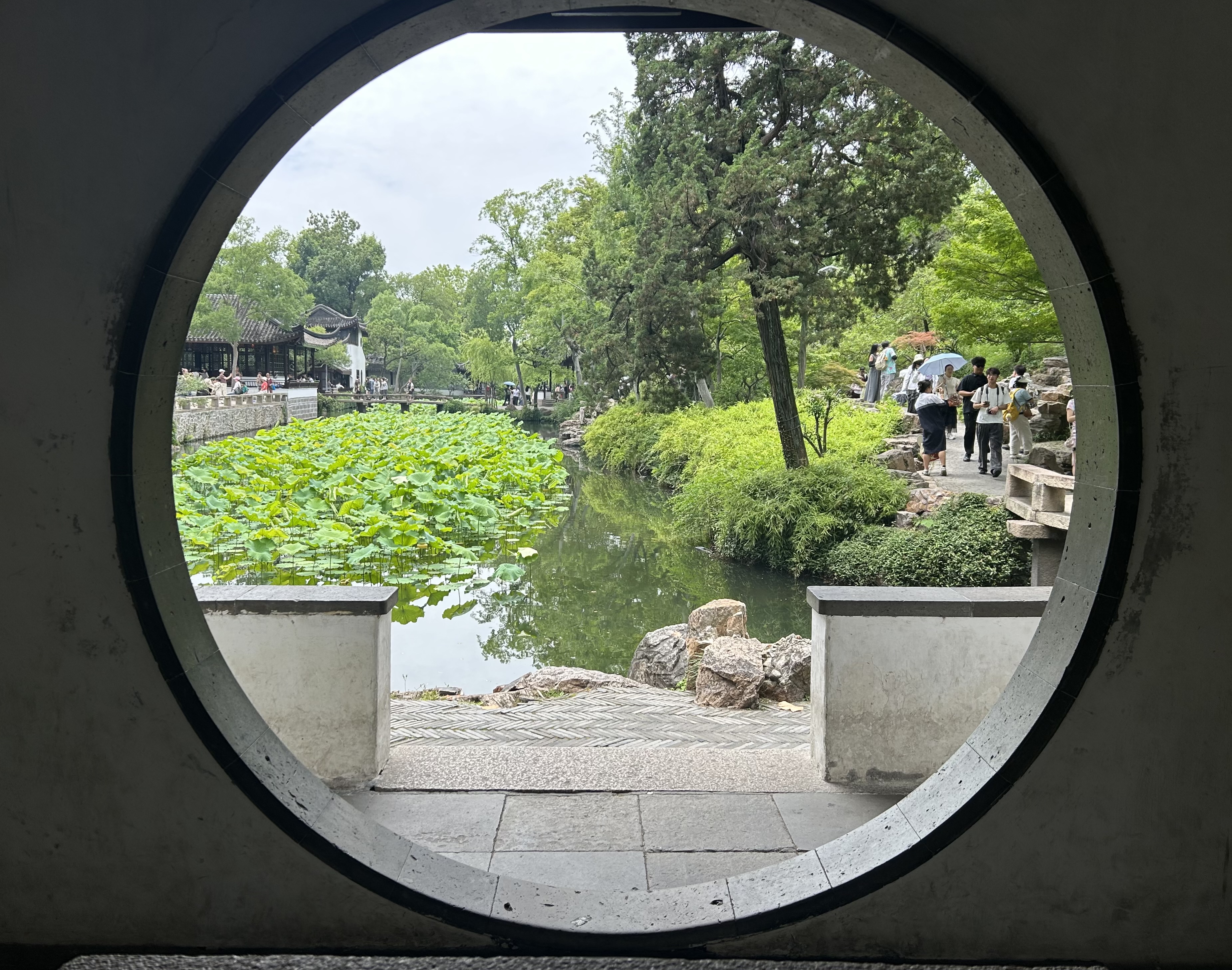
View from a pagoda in Suzhou’s Humble Administrator’s Garden
Three weeks before my trip to Shanghai, it occurred to me that I spoke exactly zero Mandarin. Trying to rectify this in a time crunch proved harder than I thought.
The logical thing to do is start with a language course, right? Well, it turns out that most language courses try to teach the whole language. They often want you to understand the grammar, and lay a solid foundation to build towards full fluency.
But I don’t care about any of that! The clock is ticking for my trip, and Duolinguo thinks the most critical phrase for me to practice is “I am a foreigner” (“我是外国人” - Wǒ shì wàiguó rén)
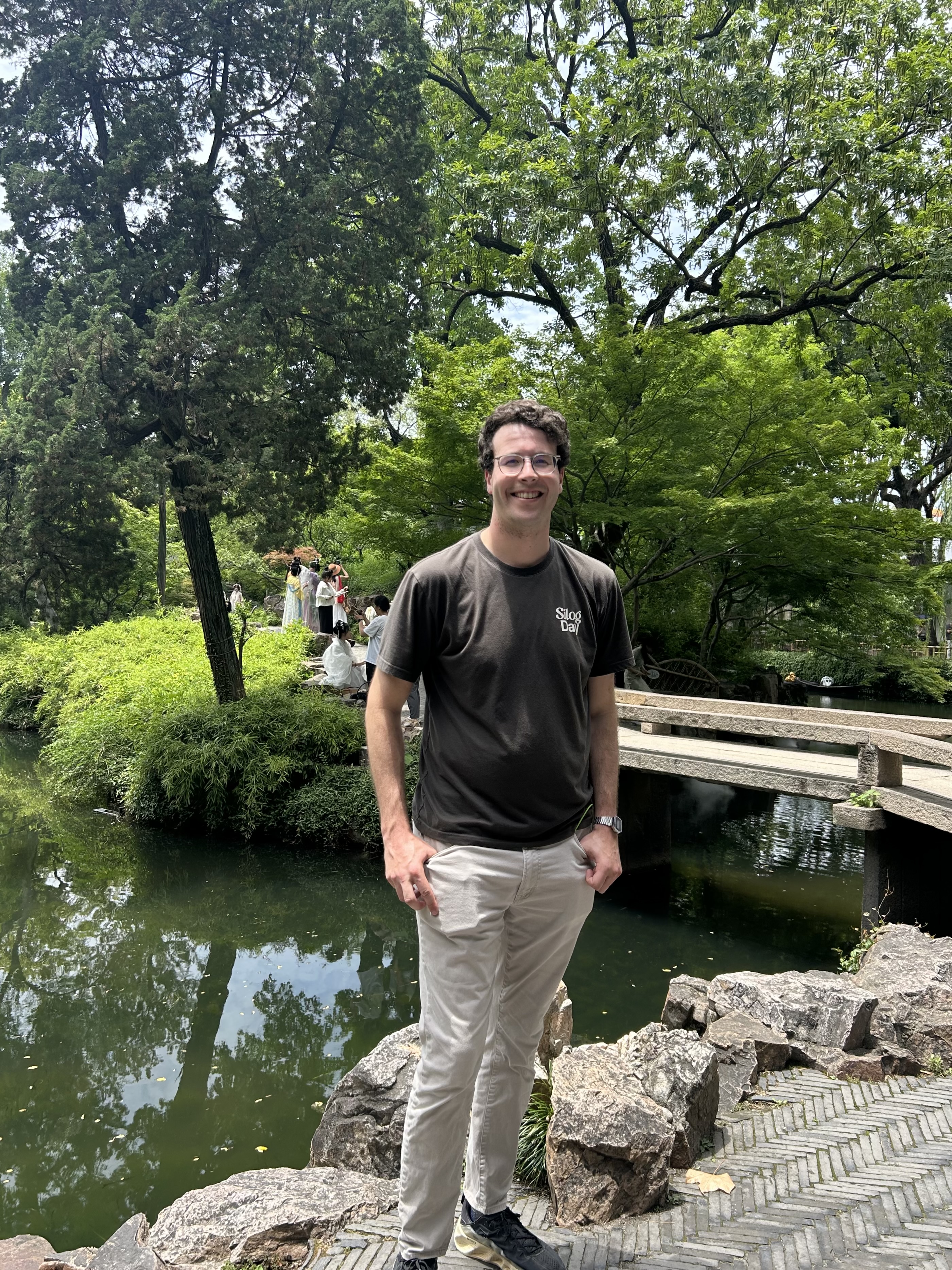
“you’re telling me this guy is a wàiguó rén?”
The fact is in 2026, you really don’t need to speak that much of a country’s language to get around. You can use Maps to get your bearings without asking for directions. You can Google Translate menus, train tickets, and hotel names. And you’re probably not planning on chatting with the locals after only three weeks of language study. None of that was a concern for me.
No, I was worried about the jumpscares. The quicktime events - those unplanned incidences where spoken word is the only way out. Say you eat something nasty and suddenly need to find a bathroom in sixty seconds. Or you’ve lost your waiter and need to ask for your check.
The question I resolved to answer is as follows: what is the bare minimum amount of Mandarin I need to speak to survive a week Shanghai?
I landed on five phrases, which combined with gratuitous hand signals and charades got me through the trip. Here they are:
“Bathroom” - Cèsuǒ (listen here)
This one doesn’t come up often, but when it does it’s an absolute lifesaver. You won’t understand spoken directions, but even a general bearing on a bathroom is critical when last night’s duck isn’t agreeing with you. As an FYI, I saw a ~50/50 split between normal restrooms and squatty potties in Shanghai - your mileage may vary.
“Where / Where is it?” - Zài nǎ lǐ (listen here)
Of all the phrases I used on this trip, Zài nǎ lǐ was the MVP. Makes sense - as a tourist in a foreign country you’ll spend a lot of time looking for stuff.
The beauty of this word is you can say / do literally anything and tack a Zài nǎ lǐ onto the end, and people instantly know you’re looking for that thing. (And a lot of folks are nice enough to help you find it, too!)
I used it to find my hotel (“Hotel Zài nǎ lǐ?"), drinking water, (*pretends to drink water* “Zài nǎ lǐ?"), and even restaurants (*points to restaurant I pulled up on Google Maps* “Zài nǎ lǐ?"). It worked nearly every time - S-tier phrase.
“Hello / Excuse me” - Nǐhǎo (listen here)
While this does mean “hello”, it has another critical use when traveling - flagging down waiters to ask for the check. This saved my bacon many times in Shanghai.
There’s only one downside to using this word. If you start a conversation with Nǐhǎo, someone may assume you actually speak the language. That’s when the next word comes in handy…
“What?” - Shén me (listen here)
While Google’s translation is more colorful, Shén me is closer to “What?” or “Huh?”. If someone starts blasting you with rapid-fire Mandarin, ripping off a Shén me or two makes it abundantly clear that you have no idea what they’re saying. From there, it’s charades time. Also helpful to ask what something is: (*points at object* “Shén me?").
“Recommendation?” - Tuī jiàn (listen here)
If you’ve made it this far, I’m going to assume you don’t read Mandarin either. This can be a problem in restaurants, where English menus are scarce or poorly translated. No one goes to IHOP for their burgers, so how can I know if I’m ordering a restaurant’s specialty? Good news - Drop in a Tuī jiàn, and they’ll recommend whatever they’re famous for!
If you’re not feeling that adventurous, there’s a middle ground too. Pointing to the menu and inquiring Tuī jiàn shén me will often result in a waiter pointing out a few options for you to Google Translate then choose from. I had a lot of luck with this strategy as well!
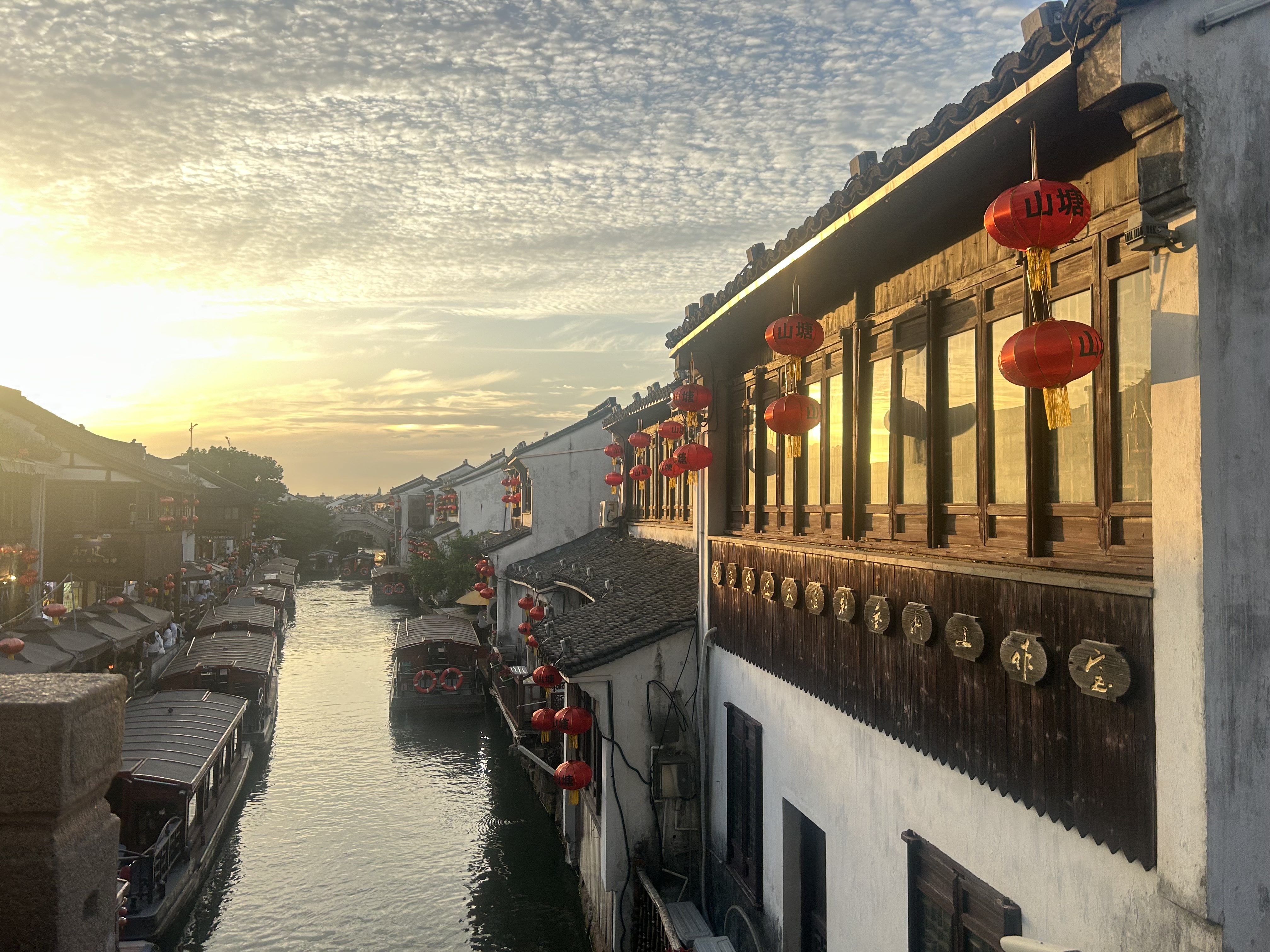
a Suzhou sunset
Conclusion
There’s no two ways about it. Language barriers are awkward. But that’s part of the fun of travel, so embrace it! Put yourself out there, ask for recommendations, and don’t be afraid of embarrassing yourself! Hopefully these phrases open the door to more great stories next time you’re overseas.